
Does Beacon Health Options Cover Therapy in NJ? How to Verify Benefits Before Your First Visit
You found a therapist your daughter is willing to see, you saw Beacon Health Options listed on her card, and then the billing office asked you three questions you couldn’t answer: what is your deductible, has it been met this year, and is your plan a commercial plan or a Medicaid managed plan through Beacon? If that sent you searching “does Beacon Health Options cover therapy in NJ,” here is the short answer. Most Beacon plans include an outpatient behavioral health benefit, so therapy may be something the plan is built to pay for. What you may actually owe, and which providers the plan may pay, depends on the answers to those three questions.
A Beacon logo on a card is not the same as knowing whether a specific practice is in network or what you may owe there. That is why ReThink MH in Neptune City, NJ checks your plan before the first visit, including whether your Beacon coverage applies to care at ReThink MH at all. The goal is to help your family know the likely cost and the authorization status before your adult child sits down with a clinician, not six weeks later when a bill shows up in the mail.
You may be worried this will be one more dead end, or that you are about to spend money you do not have on something that may not help. Those worries make sense, especially if you have already tried other options and watched them fall apart. The hardest part is walking through the door, and the insurance question should not be the thing that keeps your child standing outside it. The sections below walk through what Beacon may pay for, how verification works, and what happens if Beacon says no.
Does Beacon Health Options cover therapy in NJ?
In many cases, yes. Beacon-managed plans often include outpatient therapy as part of the behavioral health benefit. How much the plan may pay, which providers it may pay, and what it asks for first all depend on which Beacon product your member ID belongs to.
Beacon is a behavioral health company, and in most cases it manages the mental health part of a plan on behalf of someone else, like an employer or a health plan. That is why your card might show your employer’s medical insurer on the front and list Beacon for behavioral health on the back. Depending on the plan, Beacon may manage behavioral health benefits for an employer plan or for a Medicaid managed care plan, and arrangements like these change over time. Those two kinds of products follow completely different coverage rules, so every verification starts with the same step: figuring out which product the member ID represents.
You may also notice a name change. Beacon Health Options was rebranded in 2023 after it became part of a larger national health company. Some members still carry cards that say Beacon while their letters or portal messages use the new name. The benefit underneath is typically the same, so a name mismatch does not mean you are holding the wrong card.
Federal law is also on your side. The Mental Health Parity and Addiction Equity Act generally requires that when a plan covers mental health care, its copays, visit limits, and approval rules can be no stricter than those for comparable medical care. This applies to most employer plans, including large self-funded ones. It does not guarantee every visit will be paid, but it does mean therapy is not supposed to be treated as a second-class benefit.
What is the difference between Beacon commercial plans and Beacon Medicaid managed care in New Jersey?
Commercial Beacon plans come through an employer and typically involve a deductible, copays, or coinsurance. Medicaid managed plans follow NJ FamilyCare rules, which often mean little or no cost to the member for covered behavioral health services.
Checking benefits is part of clinical intake at ReThink MH, and a parent holding a Beacon card without knowing which kind of plan it is happens often. Many adult children stay on a parent’s employer plan until age 26, and those employer plans come in two types:
- Fully insured plans are bought from an insurance company and follow New Jersey insurance rules.
- Self-funded plans are ones where the employer pays claims out of its own money and hires a company to run the plan. These follow federal rules instead, and that difference matters most if you ever need to appeal a decision.
If your adult child has their own coverage through NJ FamilyCare, New Jersey’s Medicaid program, the picture changes. Out-of-pocket costs are often low or zero, and the rules about which providers your child can see, and which services need approval first, come from the managed care plan’s contract with the state. Whether ReThink MH can see a particular member depends on that member’s specific plan, and verification answers that question.
You can often tell which type you have before you call anyone, just by looking at the card:
- An employer group number points to a commercial plan.
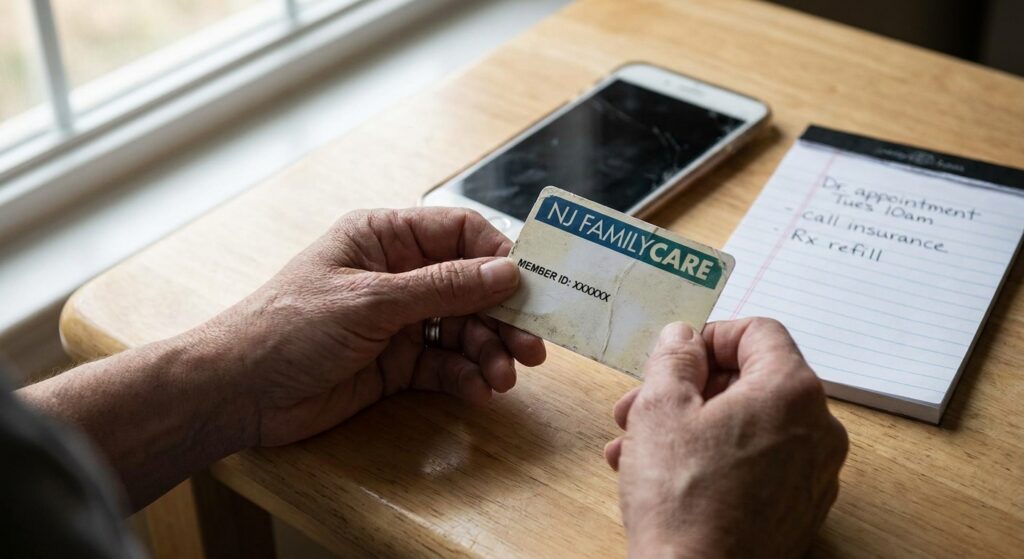
- An NJ FamilyCare logo or a Medicaid plan name points to managed Medicaid.
- If you still cannot tell, your HR department can say whether the plan is fully insured or self-funded.
Those few minutes can save you a lot of confusion later on.
What does Beacon Health Options typically pay for outpatient therapy in Neptune City?
When a provider is in network and your plan’s rules are met, Beacon may pay its share of each therapy session. Your share depends on how much of your deductible is left, your copay or coinsurance, and how close you are to your out-of-pocket maximum, which is why no one can give you an honest dollar amount without checking your specific plan first.
Here is what each of those terms means:
- Deductible: the amount you pay before the plan starts sharing costs.
- Copay: a flat fee per visit.
- Coinsurance: a percentage of the cost of each visit.
- Out-of-pocket maximum: the most you will pay in a plan year before the plan covers the rest.
These numbers can interact in ways that surprise families. Some plans have a large deductible but skip it for office visits, so therapy may cost a flat copay starting with the very first session. Plan years also do not always begin in January, and many employer plans reset on another date, so a deductible you think you met may have already started over.
At ReThink MH, treatment planning is overseen by a Clinical Director who is a co-occurring specialist with two licenses: Licensed Clinical Social Worker (LCSW) and Licensed Clinical Alcohol and Drug Counselor (LCADC). The therapists are licensed social workers and licensed associate counselors, and they hold certifications in Cognitive Processing Therapy for PTSD and trauma and in Moral Reconation Therapy (MRT). How a given session is billed can depend on the clinician’s license type, so ask the intake coordinator how sessions are billed under your plan.
One point of confusion is worth clearing up while we are talking about billing. On a bill, “CPT” means the procedure codes insurers use, such as the code for a 45-minute or 60-minute therapy session, and those two session lengths are billed under different codes that may be priced differently. When ReThink MH says its therapists are certified in CPT, it means Cognitive Processing Therapy, a structured trauma treatment. Same letters, different meaning.
Does Beacon Health Options cover Intensive Outpatient Program (IOP) for mental health in New Jersey?
Beacon plans sometimes include IOP, but under a different benefit category than weekly therapy. IOP nearly always requires prior authorization, backed by a clinical assessment, before the first group session.
IOP is for someone who may need more than one hour a week but can still live safely at home. That might be a young adult whose depression has stopped them from working, or someone stepping down after a hospital or residential stay elsewhere who is not ready to go straight back to weekly sessions. ReThink MH runs its intensive outpatient program onsite in Neptune City, Monday through Friday, with trauma-focused groups, medication education groups, and life skills groups. Weekly therapy gives your child an hour. IOP gives them structure most days of the week plus a group of people working through similar challenges.
Because IOP is often billed per day instead of per session, the cost works differently. Your plan may charge a copay or coinsurance for each IOP day, which adds up faster than a single weekly visit, so when you ask about IOP costs, ask for the per-day amount.
Before the first group, the intake team completes a biopsychosocial assessment, which looks at your child’s mental health, physical health, history, and daily life. That assessment and a personalized treatment plan become the records an insurer reviews. The insurer’s response typically states how many days are approved and when the next review is due, and the team walks you through what that means, including the step down to weekly outpatient therapy when IOP ends. If your child’s needs turn out to be greater than IOP can safely handle, such as needing residential or hospital-level care, the team will tell you honestly and help you think through where to look for that higher level of care, since ReThink MH does not provide it.
How do I verify my Beacon Health Options benefits before my first therapy visit in Neptune City?
Now that you know the difference between weekly therapy and IOP, the next step is getting the real numbers. Call ReThink MH with the Beacon member ID, your adult child’s date of birth, and the type of care you are asking about. The intake coordinator checks the plan and gets back to you with the answers that matter: whether the plan covers care at ReThink MH, how much deductible is left, the cost per visit after the deductible, and how much is left on the out-of-pocket maximum for the plan year.
| Have this ready | Why it matters |
|---|---|
| Member ID and group number | Identifies the exact Beacon product and plan |
| Your adult child’s date of birth | Confirms the right member on a family plan |
| Policyholder’s name | Needed when your child is a dependent on your plan |
| Type of care (outpatient therapy or IOP) | Each has different costs and approval rules |
You can also call the behavioral health number on the back of the card yourself. If you do, ask these questions:
- Is ReThink MH in Neptune City in network for this plan?
- Is outpatient psychotherapy subject to the deductible, or is it a flat copay?
- What does the plan pay for an IOP day?
- Does either service need prior authorization?
- Is there a limit on the number of visits?
- Are telehealth sessions covered the same way as in-person visits?
Write down the name of the person you spoke with and the call reference number.
Privacy works a little differently when your child is an adult. As the policyholder, you can often get benefit information, but once your child is in care, the clinical team needs your child’s written permission before sharing treatment details with you. That protection matters, because a young adult who trusts their privacy is safe is far more likely to keep showing up. Your child keeps their privacy, and you still get the cost answers you need.
What is prior authorization, and does Beacon require it for therapy or IOP in New Jersey?
Prior authorization is the plan’s review of whether a service is medically necessary before it agrees to pay. IOP nearly always needs it, while outpatient therapy may need it after a certain number of visits or not at all, depending on the plan.
Medical necessity reviews generally look at three things:
- Symptom severity: how serious your child’s symptoms are right now.
- Functional impairment: how much the condition is affecting work, school, self-care, and relationships.
- Risk: any safety concerns.
The records have to show that the requested level of care matches what your child needs today. A note saying “IOP has an opening on Monday” is not enough. The records need to explain why weekly therapy alone may not be enough right now.
Approval typically comes in blocks. A plan might approve a set number of IOP days and then ask for updated progress notes before approving more, which is called a concurrent review. Families sometimes panic when an approval “ends,” but often it is just a scheduled check-in and not the end of care, so ask the intake team for the review date to keep the deadline from catching you off guard.
Authorization should never stand between your child and emergency help. Under federal rules, most plans cannot require prior approval for emergency care. If your child talks about suicide or is in immediate danger, call or text the 988 Suicide and Crisis Lifeline, which is supported by SAMHSA, or call 911, and sort out the insurance afterward.
Which evidence-based therapies does ReThink MH use, and how do they fit an insurer’s review?
ReThink MH uses Cognitive Behavioral Therapy (CBT), Dialectical Behavior Therapy (DBT), and EMDR, and its therapists are also certified in Cognitive Processing Therapy and MRT. Plans generally pay based on the type and length of a session, not the name of the method, but well-established modalities with clear goals make the records a reviewer sees much stronger.
Each modality has a different purpose:
- CBT helps a person notice and change the thought patterns that may contribute to anxiety or depression.
- DBT teaches skills for handling intense emotions and crisis moments.
- EMDR is used to help process traumatic memories.
- Cognitive Processing Therapy targets the stuck beliefs that sometimes follow PTSD and trauma.
- MRT is a structured approach focused on decision-making and behavior change.
The National Institute of Mental Health describes CBT and DBT as researched forms of psychotherapy for conditions including depression, anxiety, and the patterns that sometimes come with trauma. When a treatment plan names a recognized method, a measurable goal, and a timeline, a reviewer can see why the care may make sense.
ReThink MH is licensed by the New Jersey Division of Mental Health and Addiction Services (DMHAS). The Clinical Director’s dual LCSW and LCADC licensure matters when mental health and substance use overlap. The National Institute on Drug Abuse notes that mental health conditions and substance use disorders sometimes occur together, and when a clinician licensed in both oversees the plan, the full picture appears in one place instead of being split across two providers.
For authorization, personalized treatment has to be real in practice, not just a word on paper. A client-centered plan written for your child’s depression, anxiety, or postpartum depression explains the need for care far better than a generic template, and evidence-based care that is documented clearly may help keep approvals moving.
What happens if Beacon Health Options denies prior authorization for IOP or limits therapy sessions?
Even with strong records, a plan sometimes says no at first. A denial is not always the final answer. The clinical team can request a peer-to-peer review and send more records, and your family has the right to appeal, first through the plan and then through an outside review.
In a peer-to-peer review, a treating clinician speaks directly with the plan’s medical reviewer. Denials sometimes happen because the first review missed something, like trauma history, a co-occurring substance use concern, or a safety issue that did not come through clearly in the first submission. Having a Clinical Director who is licensed in both mental health and addiction work may help fill in that full picture.
If the denial stands, formal appeal routes depend on the plan type:
- Fully insured New Jersey plans: appeal to the plan first. If that fails, request a review through the New Jersey Department of Banking and Insurance’s Independent Health Care Appeals Program.
- Self-funded employer plans: these generally use a federal external review process instead.
- NJ FamilyCare members: these generally have appeal rights through the plan, plus access to a state fair hearing.
Keep the denial letter, because the deadlines are printed on it.
If the plan limits the number of therapy visits, ask for the reason in writing. Under parity rules, limits on mental health care generally cannot be stricter than limits on comparable medical care. It can feel like the system is built to wear you down, but knowing these routes means you are not fighting it blind.
What will I owe out of pocket for therapy if I have Beacon Health Options?
What you may owe depends on whether the provider is in network, your deductible, whether it has been met, your copay or coinsurance, and your out-of-pocket maximum. Verifying benefits before the first visit replaces a guess with a real number.
The same plan can cost very different amounts depending on timing. Early in the plan year, with a high deductible untouched, your family may pay the full negotiated rate for each session until the deductible is met, while later in the year the math may look completely different. If your child had an emergency room visit or a hospital stay earlier in the year, those costs may already count toward the deductible, and on a family plan, your child’s costs may also count toward the family deductible. Either detail can lower your share without you realizing it.
The intake team at ReThink MH explains the financial picture to your family before the first appointment is scheduled, so the first bill holds no surprises. You will know whether your Beacon plan applies, whether you are looking at a copay per session, a percentage of each visit, or a per-day IOP cost, and roughly how that may add up over the first few weeks. If your Beacon plan does not cover ReThink MH, the team can tell you that up front, and ReThink MH also works with plans such as Aetna, Blue Cross Blue Shield, Cigna, UnitedHealthcare, UMR, Magellan, and Oscar Health.
If part of you is afraid this will drain everything, that fear deserves a straight answer instead of a sales pitch. Knowing the number up front lets you plan. You can ask about the first month, the full IOP block, or weekly therapy after IOP ends, and then decide with real information in front of you.
How do I contact ReThink MH in Neptune City to verify my Beacon Health Options benefits?
So, does Beacon Health Options cover therapy in NJ for your family specifically? The fastest way to find out is to call ReThink MH’s intake line with the Beacon member ID, your adult child’s date of birth, and the type of care your child needs. ReThink MH in Neptune City checks benefits before the first visit, so your family learns the likely cost and authorization status up front instead of finding coverage gaps after care has started.
The call is not an interview, and nobody is there to judge. Many parents call before their adult child has agreed to anything, and that is okay. Getting the insurance answer ready now means it is waiting when your child says yes. If your child refuses at first, you can still learn what the plan may cover, what IOP involves, and what a first visit looks like, so you have something concrete to share when the moment comes.
If your child has tried therapy before and nothing changed, say so on the call. That history helps the team decide whether weekly therapy or IOP may be the better fit, and it helps them build a plan that does not repeat what already did not work.
Call ReThink MH in Neptune City at the number listed on rethinkmh.com. Have your Beacon Health Options member ID and your adult child’s date of birth ready, and ask the intake coordinator to verify benefits and authorization status before you schedule the first therapy or IOP visit.
Before you hang up, ask for the insurer’s call reference number and write it on the back of your child’s insurance card. If a bill ever does not match what you were told, that one number lets anyone trace exactly what the plan said on the day your benefits were checked.
Take the Guesswork Out of Your Beacon Coverage
If you’re ready to start therapy but unsure whether your Beacon Health Options plan will cover treatment at ReThink MH, you don’t have to figure it out alone. Our team in Neptune City can walk you through your specific benefits and help you understand what to expect before you commit to anything. Reach out today and let us handle the verification process for you.
Treatment outcomes, insurance coverage determinations, and authorization decisions vary based on individual clinical presentation, plan structure, and medical necessity criteria specific to each person’s situation.